How to take your measurements to become a model: the complete guide
Want to become a model? Learn how to take your measurements like a pro: the essential measurements, agency standards, and mistakes to absolutely avoid.
 by JC Billerey11 min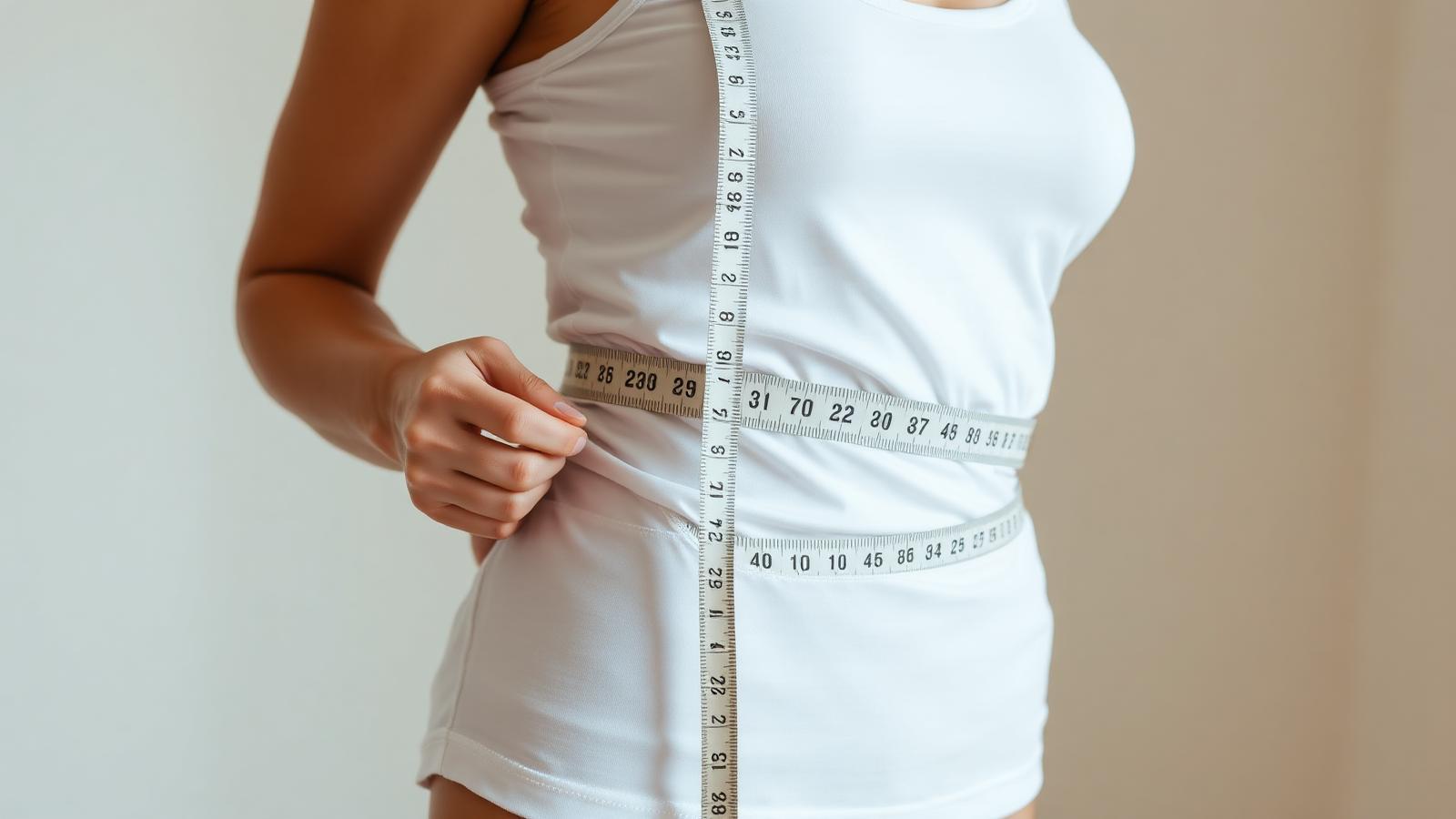
There is no single set of model measurements. Agencies sort profiles into boards, and every board has its own range. Of the 617 verified agencies I list across 21 countries, 55 have a plus-size board, 30 accept atypical profiles and 28 have a senior board.
So the honest answer to "what measurements do I need" is another question: which board are you applying to?
Below are the ranges agencies publish, in centimetres, followed by the number of agencies in my directory that actually open each door. Then I explain how to measure yourself properly, because a badly taken measurement gets an application discarded before anyone looks at your face.
Model measurements by board: the chart
These are the ranges agencies and industry publications typically state. They are not rules, and further down I explain why they contradict each other. Height is barefoot.
Women
| Board | Height | Bust | Waist | Hips |
|---|---|---|---|---|
| Runway / high fashion | 173 to 180 cm (5'8" to 5'11") | 81 to 86 cm (32 to 34 in) | 61 to 64 cm (24 to 25 in) | 86 to 91 cm (34 to 36 in) |
| Commercial | from about 168 cm (5'6") | No fixed range. Brands cast for resemblance to their customers, not to a sample size. | ||
| Plus-size / curve | No standard height requirement | Usually EU 42 to 54 (US 12 to 24). Proportion matters more than any single number. | ||
| Petite | 157 to 170 cm (5'2" to 5'7") | Proportional to height. Brands casting petite lines need bodies their clothes were cut for. | ||
| Senior | No height requirement | Casting is driven by age and presence, not by measurements. | ||
| Parts | Not relevant | Only the body part being booked is assessed: hands, legs, feet, eyes. | ||
Men
| Board | Height | Chest | Waist |
|---|---|---|---|
| Runway / high fashion | 180 to 191 cm (5'11" to 6'3") | 96 to 107 cm (38 to 42 in) | 76 to 81 cm (30 to 32 in) |
| Commercial | from about 175 cm (5'9") | No fixed range. | |
| Parts | Not relevant | Only the booked body part is assessed. | |
Where these numbers come from, and why they disagree
I want to be straight with you about this, because nobody else in this corner of the internet is.
Every site publishing a measurement chart, including this one, is summarising figures that agencies and trade publications state on their own websites. Those figures do not agree. On the minimum height for women's runway, published sources land anywhere between 172 and 175 cm, a three centimetre spread on the single number people care about most. On the upper limit, some agencies name 181 cm and others name nothing at all. I have seen a well ranked agency site tell readers that below 175 cm they have no chance, and in the same breath tell women above 181 cm that they will struggle too.
No chart on the internet, mine included, is a threshold you passed or failed.
Here is what is actually true and verifiable: garments for runway and showroom are cut in fixed sample sizes, and a model has to fit them without alteration. That is the entire mechanical reason the runway board is narrow. It is a logistics constraint about clothes, not a judgement about bodies. Every other board exists precisely because most clients are not casting for a sample rail.
Which doors are actually open
This is the part I can verify, because it comes from my own directory rather than from someone else's blog. Of the 617 agencies I list across 21 countries, here is how many run each board.
| Board | Agencies | Share of total | Countries |
|---|---|---|---|
| Women | 576 | 93.4 % | 21 |
| Men | 562 | 91.1 % | 21 |
| Talent (actors, presenters) | 146 | 23.7 % | 14 |
| Children | 86 | 13.9 % | 12 |
| Plus-size | 55 | 8.9 % | 11 |
| Influencer | 42 | 6.8 % | 10 |
| Atypical profiles | 30 | 4.9 % | 7 |
| Senior | 28 | 4.5 % | 6 |
| Sport | 21 | 3.4 % | 4 |
| People | 17 | 2.8 % | 2 |
| Body parts | 9 | 1.5 % | 3 |
55 of these agencies run a plus-size board, 28 run a senior board, and 30 are actively looking for profiles that do not fit any conventional category. These are not consolation prizes. They are counted doors, in 21 countries, and each one has an application form.
If your measurements do not sit inside the runway range, the useful next step is not to change your body. It is to filter the directory by the board that matches you, and apply to those agencies instead.
How to take your measurements correctly
Agencies search their databases by exact figures. If yours are wrong, you will not be found, and if they are wrong at a go-see the agency will notice in about four seconds. Take them once, properly.
You need a soft tape measure, a mirror, close-fitting clothes or underwear, and ideally someone to help with the hips.
Height
Barefoot, back against a wall, heels together, looking straight ahead. Place a book flat on your head, parallel to the floor, mark the wall, then measure from the floor to the mark. Always report your barefoot height. Agencies know what heels do, and they will check.
Bust or chest
Around the fullest part, tape horizontal and parallel to the floor, arms down. Breathe normally. Do not pull the tape tight.
Waist
Around the narrowest part of your torso, usually two to three centimetres above the navel. Do not hold your breath and do not tighten the tape. An agency that finds a four centimetre gap at a fitting will simply stop calling.
Hips
Around the widest point, feet together. This is the one people most often get wrong, because the widest point is lower than most people assume. Use a mirror or ask someone.
Inseam
From the top of the inner thigh to the floor, barefoot. Used for trousers on runway and catalogue work.
Shoe size
Give your EU size, and add US or UK if you are applying abroad. Sample shoes come in fixed sizes, so this genuinely decides whether you can be booked for some jobs.
Eye and hair colour
State them plainly. If you dye your hair, say what it is today, not what it was in your favourite photo.
The four mistakes that get applications discarded
Rounding in your favour. Adding two centimetres of height or removing three from the waist is the fastest way to be dropped, because the agency measures you at the first meeting. You have not gained an interview, you have lost the agency.
Giving your height in shoes. Always barefoot. Always.
Sending measurements that are a year old. Retake them before every application round, especially if you are under twenty.
Using the wrong units. If you apply to an agency in Paris, Milan or London, give centimetres. If you apply in New York, give both. Putting the unit next to the number costs you nothing and removes all ambiguity.
How to present your measurements
On a comp card and in an email, the standard order is height, bust or chest, waist, hips, shoe size, eye colour, hair colour. One line, no paragraphs, units stated. Something like: 176 cm, 84 cm, 62 cm, 89 cm, EU 39, green eyes, dark brown hair.
That is it. No commentary, no apology for a number you do not like, no explanation. The agency wants data, and a candidate who presents data cleanly already looks like a professional.
One thing to remember
A legitimate agency is paid a commission on the work it books for you. It is paid by its clients, never by you. Any structure that reacts to your measurements by offering to sell you a book, a training course, a photo session or a registration fee is not an agency, whatever it calls itself. Modelling is a profession, not a dream to be sold to you.
Frequently asked questions
What are the model measurements for women, in cm?+
How tall do you have to be to be a model, in cm?+
What is the model waist size in cm?+
Can you be a model if you do not have the standard measurements?+
Why do measurement charts on different websites disagree?+
Should I round my measurements to look closer to the standard?+
Does a modelling agency ever charge for assessing my measurements?+
Related reading

Modeling agency: how to apply, get in touch and get scouted
Applying to a modeling agency, contacting them, joining their board, getting scouted: the complete and honest guide, no empty promises, with the right reflexes to adopt today.
JC Billerey11 min
How to become a model: everything you need to know about the modeling world
Dreaming of becoming a model and entering the modeling world? This complete guide reveals everything you need to know to become a professional model.
JC Billerey